Space & Aerospace Program
Robotics Beyond Earth
The same characteristics required for hazardous terrestrial environments — autonomy, low maintenance, modularity, health monitoring, and resilience — become even more important in space. Leviathan’s nearer-term engineering work builds capabilities that can eventually translate into aerospace and off-world operations.
Earth Is the Test Range
What Terrestrial Engineering Teaches Space Engineering
| Terrestrial Capability | Space Application |
|---|---|
| Autonomy in communication-limited environments | Operation under orbital and deep-space signal delay |
| Low-maintenance, modular field systems | Systems that cannot be serviced by a technician |
| Continuous machine-health monitoring | Fault detection with no possibility of rescue |
| Energy-aware motion and operation | Survival on fixed, unreplenishable power budgets |
| Resilience to corrosion, heat, and impact | Resilience to radiation, vacuum, and thermal extremes |
Orbit
Orbital Operations
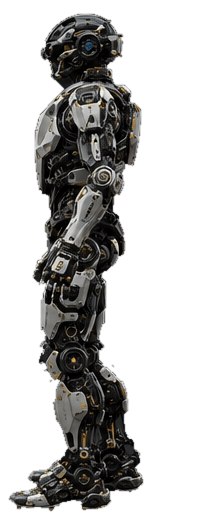
Aerospace G1-X2 Concept
A configuration adapted for aerospace ground and orbital support operations.
The Moon & Planetary Systems
Long-Term Research Toward Planetary Operations
Clearly labeled as future research and development — Leviathan does not pretend that undeveloped systems already exist.
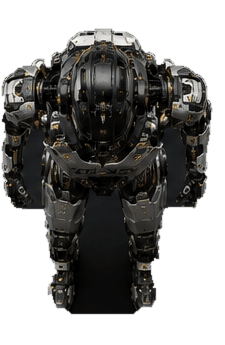
Planetary G1-X2 Research Concept
A future configuration operating on lunar or planetary terrain.
Our first proving grounds are here on Earth.
Our horizon is not.